- sales@hot-mining.com +86 28 8331 1885 +86 15196677188
-

-

-


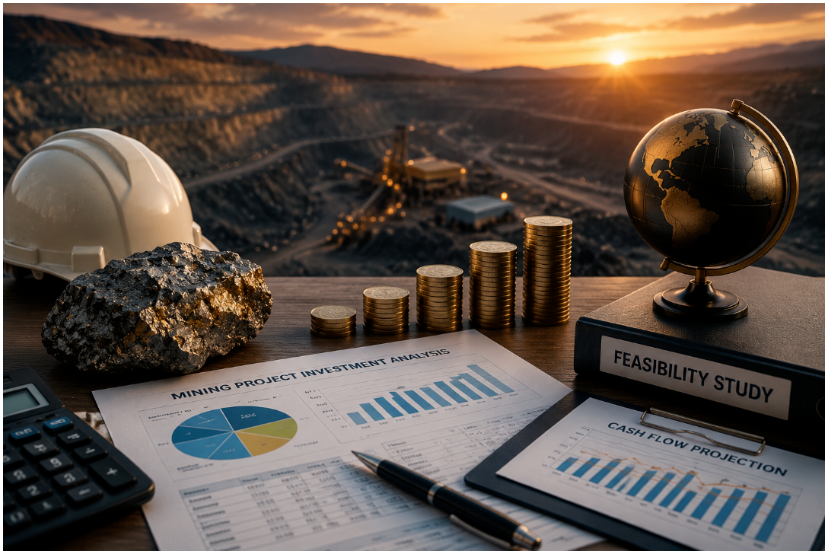
Across the mining industry, many projects with strong resource foundations continue to struggle to secure financing.
Over the years, numerous projects have demonstrated attractive mineral deposits, substantial resource estimates, experienced management teams, and promising market prospects. Yet their owners may spend years searching for investors without ultimately completing a financing transaction.
Meanwhile, some projects with smaller resource bases or more challenging development conditions manage to attract capital much faster.
The difference often has little to do with the quality of the mineral deposit itself.
What ultimately determines whether a project can secure financing is usually the overall structure of the project and the strength of its investment proposition.
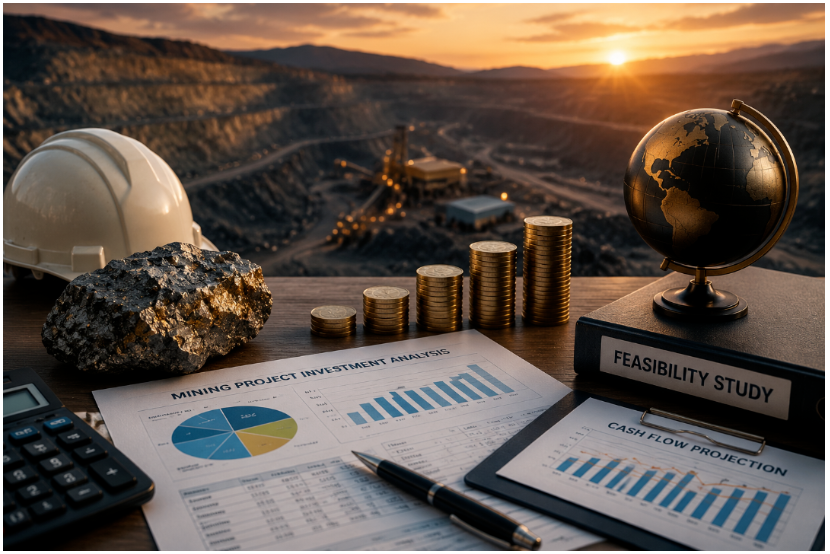
Many project owners assume that fundraising simply means finding investors.
In reality, professional investors are often less concerned with whether capital is available and more concerned with whether a project is genuinely ready to receive investment.
Institutional investors, private equity funds, family offices, strategic investors, commodity companies, and project finance institutions all apply rigorous screening processes when evaluating mining projects.
Many projects are eliminated before they even reach the stage of detailed technical assessment.
The reason is that investors are not simply investing in mineral resources. They are evaluating:
• A well-structured financing framework;
• A clearly defined development pathway;
• A management team with the capability to execute the project;
• A manageable risk profile;
• A clear pathway to generating cash flow.
When these elements are not properly aligned, financing costs can increase significantly, and the project may struggle to attract capital altogether.
• Are the mineral resource estimates classified in accordance with internationally recognized reporting standards?
• Is there a credible project development plan?
• Has a feasibility study suitable for financing and investment evaluation been completed?
• Are production forecasts realistic and supported by technical evidence?
• Are clear product marketing and sales channels in place?
• Is the capital expenditure plan clearly defined?
• Can the project remain resilient when commodity prices decline?
Projects that cannot provide clear and convincing answers to these questions are unlikely to progress to the next stage.
As investors become increasingly selective about critical minerals, battery materials, precious metals, and strategically important mineral projects, the standards for mining finance continue to rise.
The capital markets are not necessarily short of funding.
Capital is increasingly seeking projects that are more mature, better prepared, and capable of offering greater investment certainty.
One common mistake made by mining companies is treating financial models as supporting documents.
In reality, a financial model is the foundation of the entire financing process.
Whether preparing:
• Investor presentations;
• Information Memoranda (IMs);
• Investment term sheet negotiations;
• Project valuation analyses;
• Debt financing proposals;
• Equity return assessments;
all these materials should be based on the same validated financial model.
If the data and assumptions differ across documents, professional investors can usually identify the inconsistencies quickly.
For example, discrepancies between key project metrics presented in supporting documents and those used in the financial model can undermine investor confidence during a single investment discussion and may even affect the entire financing process.
A strong mining project does not use a financial model simply to tell an attractive investment story.
A reliable financial model must withstand comprehensive technical, commercial, and financial scrutiny while addressing the questions that matter most to investors.
Beyond resource quality and technical conditions, many project owners overlook another critical question:
Who will buy the mineral products, and how will the project convert its resources into commercial value?
A mining project does not create value simply because mineral resources exist underground.
A commercially viable project needs a complete pathway connecting resource development, production, and product sales.
• Whether offtake agreements are under discussion;
• Whether expressions of interest have been received from potential buyers;
• Whether strategic customer relationships have been established;
• Whether a clear product marketing and sales strategy is in place;
• Whether projected product prices are consistent with market realities.
A clear commercial pathway helps investors understand not only what a project can produce, but also how its products will reach the market and generate revenue.
Many mining projects struggle to advance their financing plans not because capital is unavailable, but because project owners focus too heavily on one question:
How much financing can we raise?
They often overlook a more important question:
What financing structure is best suited to the project's development?
• Whether the debt-to-equity ratio is appropriate;
• How shareholder interests are structured;
• How investment returns will be distributed;
• How equity dilution risks will be managed;
• Whether a clear exit strategy is available;
• How well the project can withstand commodity price volatility.
The best mining transaction is not necessarily the one with the highest valuation.
A successful transaction is one that achieves an appropriate balance between risk, returns, and capital structure.
Investors understand that the mining industry is inherently cyclical.
They are concerned not only with how much a project can earn during periods of strong commodity prices, but also with whether it can remain financially and operationally sustainable when prices fall or market conditions deteriorate.
Mining projects that successfully attract institutional investment often share several characteristics:
• Transparent and well-developed financial models;
• Consistency between technical documentation and financial data;
• A well-designed financing structure;
• A clearly defined project development plan;
• A credible product marketing and sales strategy;
• An experienced management team;
• Comprehensive risk analysis;
• A professional investor communication framework.
More importantly, these projects have usually completed substantial preparation before approaching investors.
Investor confidence is not established during the first project presentation.
Genuine trust comes from thorough, systematic, and consistent preparation over time.
A project with a clearly established commercial pathway may attract greater investor interest than a technically advanced project with no reliable route to market, even if the former has a more modest resource base.
This is particularly relevant in the critical minerals and battery materials sectors.
As the energy transition accelerates and supply chain security becomes increasingly important, mineral supply chains themselves are emerging as strategic assets.
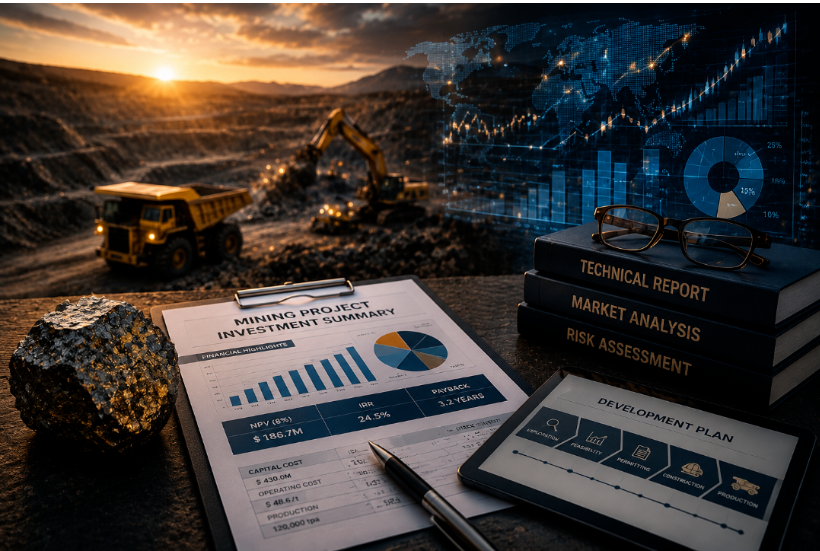
With growing global demand for strategic resources such as copper, lithium, nickel, rare earth elements, graphite, and uranium, the mining industry is entering one of its most significant development phases in decades.
The energy transition, AI infrastructure, data centers, energy storage systems, electric vehicles, and power grid upgrades all depend on substantial supplies of critical minerals.
The biggest challenge facing mining projects today is not necessarily a lack of investor interest.
It is whether projects are sufficiently prepared to attract and accommodate the capital seeking investment opportunities in the sector.
Companies that proactively strengthen project structures and improve investment readiness will be better positioned to capture emerging opportunities.
By contrast, projects that rely solely on the quality of their mineral resources while neglecting commercial models, financing structures, and investment propositions may find fundraising far more difficult than expected.
Mining projects that ultimately secure financing are not necessarily the largest, the oldest, or the most technologically advanced.
In many cases, the projects that gain investor confidence are those that successfully integrate:
• Project planning;
• Technical documentation;
• Corporate governance;
• Risk management;
• Commercial strategy;
• Financial structure.
Together, these elements form a complete, credible, and investable project proposition.
Resources create opportunities.
Structure attracts capital.
In today's mining investment environment, whether a project can progress from planning to production often depends on whether it has a sufficiently mature investment structure and a compelling financing proposition.