- sales@hot-mining.com +86 28 8331 1885 +86 15196677188
-

-

-

Many people ask me the same question: Why did I continue to pursue a career in the mining industry after graduating from Harvard Business School? And why focus on AI + Mining?
To many people, mining is far from a glamorous industry. It is capital-intensive, has long investment cycles, operates across geographically dispersed locations, and involves complex, non-standardized processes. In almost every respect, it seems to be the opposite of the internet industry's traditional strengths.
Yet this is precisely why we believe mining is one of the few major industries that has not yet been fully industrialized in the modern sense.
Over the past few years, I have repeatedly asked myself one question:
Why has a trillion-dollar industry like mining yet to produce a truly system-level technology company?
Compared with other industries, this is unusual.
• In manufacturing, there is Siemens.
• In industrial automation, there is Schneider Electric.
• In data platforms, there is Palantir.
Yet the mining industry still lacks a comparable platform-oriented company. And behind this gap lies a significant opportunity.
Step onto a mine site, and you will notice something interesting: many critical decisions are still based largely on experience.
• What grinding particle size should be targeted?
• How much reagent should be added?
• What causes fluctuations in recovery rates?
• Why is production stable today but lower tomorrow?
The issue is not that data is unavailable. Rather:
Data has not been integrated into systems, and systems have not yet developed the ability to drive decisions.
This is the fundamental challenge facing mining: the industry has not yet become truly computable.
AI has attracted enormous attention in recent years. Yet many AI projects in mining ultimately remain confined to PowerPoint presentations.
The reason is simple:
AI cannot create real value if it cannot reach the mine site.
Mining is fundamentally different from an internet-based environment. It is:
• A physical system involving equipment, processes, and ore.
• A highly constrained system governed by safety, production, and cost requirements.
• A non-standardized environment in which every mine has its own characteristics.
Without engineering capabilities, process knowledge, and the ability to interact with and control equipment, AI cannot deliver meaningful operational value.
That is why we never defined ourselves as an AI company from the outset.
Instead, we chose to take a more pragmatic approach:
Enter the mine site first, then make AI work.
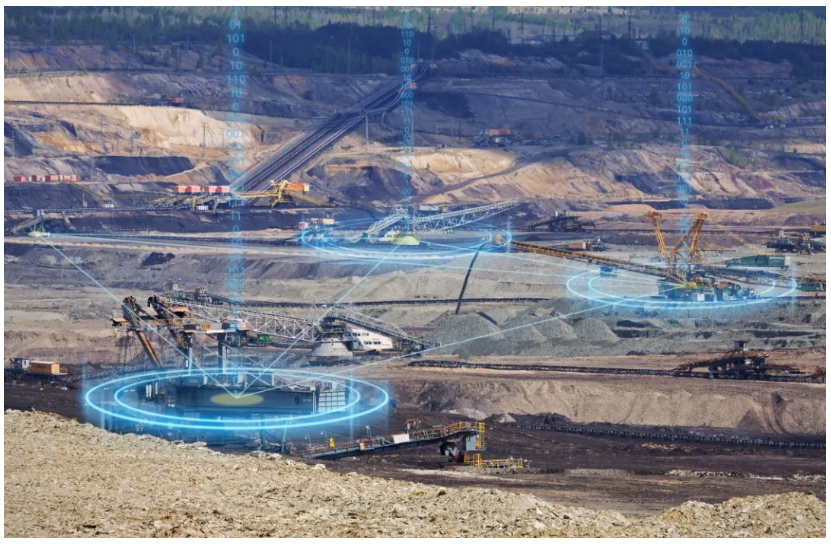
The work HOT has undertaken over the past few years can be summarized in four steps.
We provide mineral processing plant design, mine development, EPC services, and operational services.
This is the most difficult step, but it is also essential for gaining genuine access to mine-site operations.
We develop and deploy XRT sorting systems, online analysis solutions, and process control systems.
These are more than just products. They serve as key entry points for collecting operational data and interacting with the production process.
Once equipment, processes, and production data are connected, the mine becomes observable.
Operational conditions can be monitored, analyzed, and linked across the production system, creating the foundation for more informed decisions.
Only at this stage can AI deliver its full value.
It is no longer limited to making predictions. It can help influence production output, operating costs, and recovery rates through its integration with actual operating processes.
We are not simply developing a piece of software.
We are building an industrial system designed to operate in real mining environments.
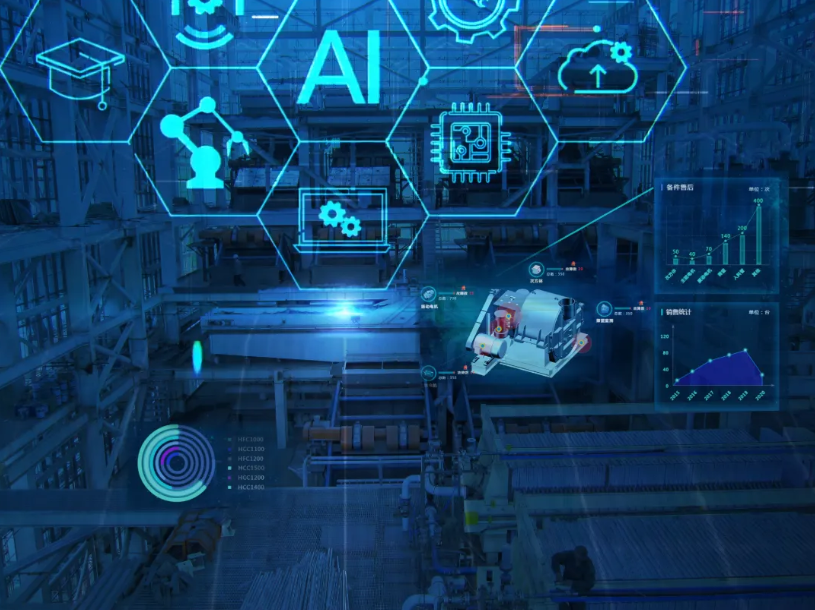
People often ask: Is this difficult?
The answer is yes—extremely difficult.
But complexity also creates barriers to entry.
The mining industry may not develop a winner-takes-all market like the internet industry. Instead, it is likely to reward companies with:
• The strongest system-level capabilities.
• Solutions that can be replicated across mining operations worldwide.
• The ability to turn technology into measurable productivity.
We see ourselves as a different kind of company.
We are neither a traditional engineering contractor nor a pure AI company. Our ambition is to build an industrial systems business similar in nature to Siemens or Schneider Electric, but focused on the deeper and more specialized vertical of mining.
Competition in the mining industry is entering an important new phase.
The question will no longer be simply who owns the mineral resources. It will increasingly be about:
• Who can operate at a lower cost?
• Who can achieve higher recovery rates?
• Who can maintain a more stable operating system?
• Who can replicate successful solutions across global operations more quickly?
At their core, these are not simply questions of resource ownership.
They are questions of system capabilities.
Some people see HOT as a mining engineering company. Others view us as an AI company.
Neither description fully captures what we are trying to achieve.
Our real ambition is to transform mining from an experience-driven industry into a system-driven one.
This transformation will take time. But once such a system is established, it can create substantial and lasting competitive advantages.
Over the next few years, we will focus on three priorities:
1. Strengthening engineering and project delivery capabilities to ensure deeper access to real mining operations.
2. Advancing the productization of equipment and systems to improve scalability and replicability.
3. Expanding the large-scale application of data and AI to build platform-level capabilities.
These priorities may not sound glamorous, but they represent the practical path required to make our vision a reality.
While many are still debating whether AI can enter the mining industry, we are more focused on a different question:
How can we make AI deliver tangible results at actual mine sites?
If we can make this happen, mining will become more than a resource industry.
It will evolve into a truly intelligent industrial sector.