- sales@hot-mining.com +86 28 8331 1885 +86 15196677188
-

-

-

Throughout coal production and utilisation, ash and moisture measurement have remained essential to quality control and cost management. High ash content means lower effective calorific value and poorer combustion efficiency, while high moisture content increases transportation costs and reduces fuel performance. For coal mining companies, accurate measurement is not only a matter of economic performance but also a key factor in market competitiveness.
Yet these seemingly straightforward quality indicators have been the subject of a long process of technological evolution.
In the past, coal ash and moisture measurement at most mining operations relied almost entirely on laboratory testing. Samples had to be collected from conveyor belts, transported to laboratories, prepared, dried, weighed and then analysed.
Advantage: Laboratory results are highly accurate and are widely regarded as the reference method.
Limitation: Testing can take several hours or even longer. By the time the results become available, changes in coal quality may have already passed the point at which production adjustments could be made.
It is like using a thermometer to measure the temperature of a volcano: by the time the reading is available, the lava may already have changed course, and actual production conditions may be completely different.
One large coal mine reportedly experienced a delay in testing that resulted in 30,000 tonnes of clean coal exceeding the specified ash limit, causing direct losses of more than RMB 20 million.
To overcome the delays associated with laboratory testing, online X-ray ash and moisture analyzers gradually found their way into coal processing operations.
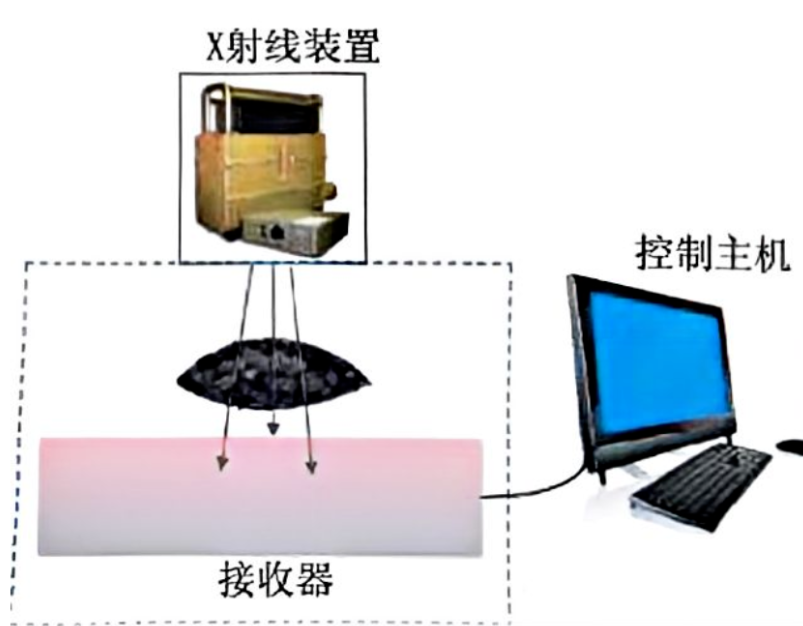
The basic principle is as follows:
As X-rays pass through a coal layer, their absorption and attenuation are related to the ash and moisture content.
By analysing changes in signal intensity, the instrument calculates the corresponding ash and moisture values.
This technology made it possible to monitor coal quality directly on conveyor belts, giving mining operations the ability to track coal quality in real time for the first time.
However, practical applications gradually revealed several limitations.
01. Measurement Errors Caused by Coal Layer Thickness
Many instruments operate on the assumption that the coal layer has a fixed thickness of approximately 1.5 cm. In actual operation, however, conveyor belts can vibrate, causing fluctuations in coal layer thickness. A variation of just ±2 mm may introduce measurement deviations.
02. The Complexity of Different Coal Types
Coal from different regions and of different types can vary significantly in mineral composition and X-ray absorption characteristics. Conventional X-ray systems primarily capture an averaged response from the material within the measurement area, making it difficult to fully characterise the overall properties of a changing coal stream.
It is rather like trying to understand an entire elephant by touching only one part of its body.
03. Limitations of Conventional Algorithms
Many conventional instruments rely heavily on linear regression models, essentially using a single straight-line relationship to fit all measurement data. When coal quality changes, these models may struggle to adapt dynamically, resulting in reduced measurement reliability.
04. Comparison with International Technologies
Even established technologies in the market, including PGNAA systems from Thermo Fisher and domestic dual-energy X-ray fluorescence (XRF) equipment, are described in the source material as having measurement errors of around 0.5%. According to the product comparison presented here, this may fall short of the increasingly demanding requirements of modern coal mines for precise, real-time quality monitoring.
In other words, this stage of technological development addressed the problem of speed, but challenges involving accuracy and adaptability remained.
With advances in artificial intelligence, a new approach has emerged: enabling analytical instruments to learn from data and continuously improve their measurement performance.
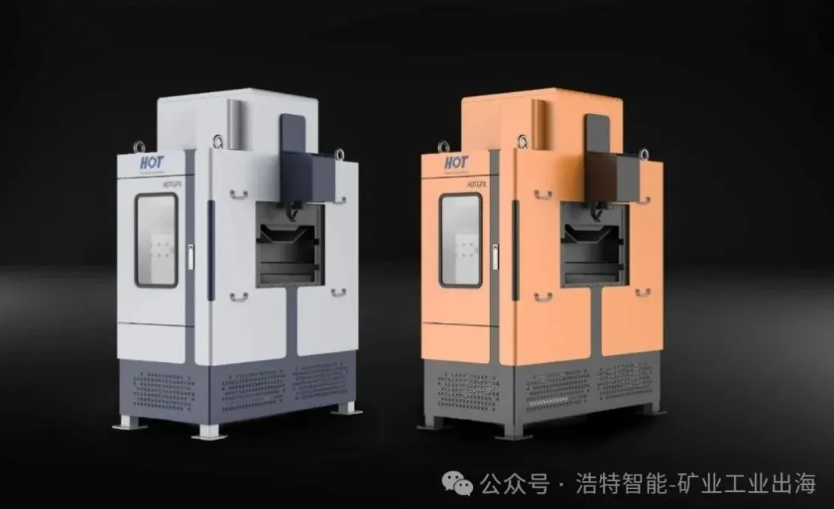
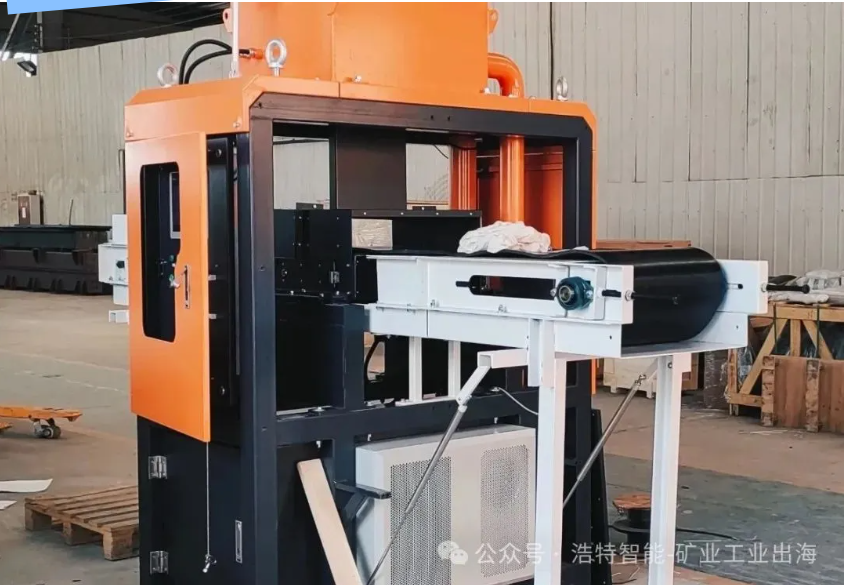
HOT's next-generation X-ray intelligent coal ash and moisture analyzer has been developed around this concept. It combines mechanical optimisation, large-scale experimental training, multi-model AI algorithms and continuous operational learning.
The conveyor belt system has been mechanically improved to maintain a more stable coal layer and minimise thickness fluctuations caused by vibration.
Much like equipping a vehicle with an improved suspension system, a more stable measurement environment helps reduce external interference and improve data reliability.
Traditional approaches often rely on relatively limited datasets to establish calibration models. This is similar to expecting someone to recognise every type of coal after looking at only a few photographs.
HOT's approach uses experimental data from more than 100 different coal samples under multiple coal layer thickness conditions to train the algorithm.
By learning from a broader range of coal characteristics and measurement conditions, the system is designed to better accommodate variations in coal quality and deliver more reliable measurement results across different applications.
Rather than relying on a single algorithm, the analyzer integrates three complementary approaches:
Linear Regression: Handles linear relationships within the measurement data.
Gradient Boosting Decision Trees (GBDT): Captures more complex nonlinear patterns and relationships.
Deep Learning: Uses larger datasets to identify patterns and continuously optimise model performance.
Working together, these algorithms provide a more comprehensive analytical framework. The approach is similar to a team of specialists reviewing the same case: each model contributes a different perspective, helping produce more robust results.
With on-site GPU computing resources and NVIDIA CPU hardware, the analyzer can compare predicted results with actual measurement results during operation and automatically correct deviations.
This means the equipment is not limited to a fixed calibration model. Instead, it can continuously learn and adjust as operating conditions change.
According to the stated product performance, this approach can reduce measurement error to within 0.3% during long-term operation.
The next generation of intelligent coal analysis is designed to deliver more than improved measurement accuracy. It also creates opportunities to improve production management and economic performance.
Real-Time Decision-Making
High-frequency monitoring at intervals of 10–20 seconds supports closed-loop production control. Applications include adjusting coal preparation reagents, separating clean coal from tailings, and classifying products for dispatch. This enables faster operational responses and more stable production.
Adaptability to Multiple Coal Types
Calibration based on more than 100 coal samples, combined with on-site fine-tuning, helps the analyzer accommodate different coal sources more efficiently and reduces the need for frequent manual recalibration.
Operating Cost Reduction
More accurate ash measurement and control can help prevent excessive coal washing and unnecessary processing, reducing reagent consumption, electricity use and labour costs. This can also contribute to a shorter investment payback period.
Consistent Product Quality
More stable control of product specifications helps reduce quality-related disputes with customers and strengthens the reliability of long-term supply relationships.
Operational Compliance and Traceability
The system can support environmental monitoring, contract performance management and dynamic pricing. System logs and model management functions can also facilitate auditing and operational traceability.
International Competitiveness
With a stated measurement error of no more than 0.3%, together with continuous learning and adaptability to different coal types, the analyzer is designed to offer a competitive solution for coal quality monitoring in global markets.
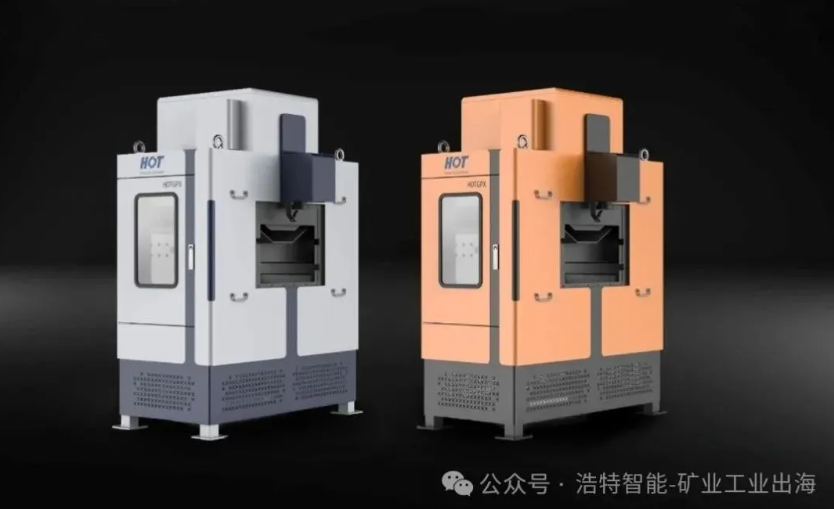
The evolution of coal analysis represents a transition from manual testing to automated measurement and, ultimately, intelligent analysis.
By combining mechanical optimisation, multi-model AI algorithms, large-scale experimental training and continuous operational learning, HOT's next-generation X-ray intelligent coal ash and moisture analyzer aims to address key limitations of conventional measurement systems.
Beyond improving measurement performance, it provides coal mining and preparation companies with a tool to enhance operational efficiency, control processing costs and maintain consistent product quality.
As the coal industry continues its transition towards intelligent operations, advanced online analysis technologies will play an increasingly important role in building more responsive, efficient and data-driven production systems.