- sales@hot-mining.com +86 28 8331 1885 +86 15196677188
-

-

-

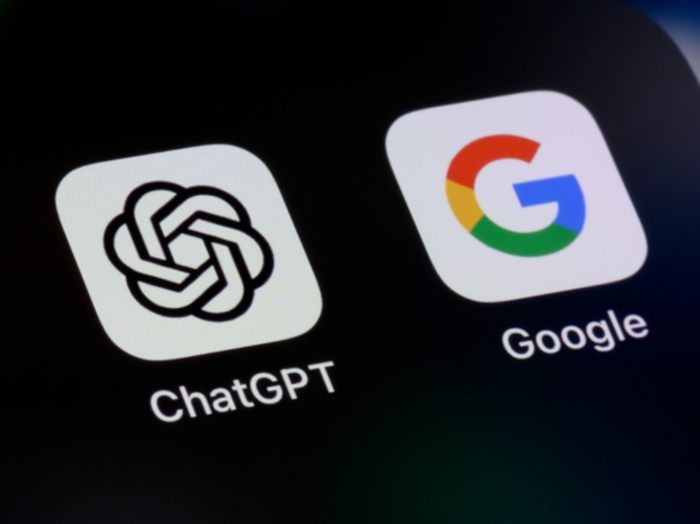
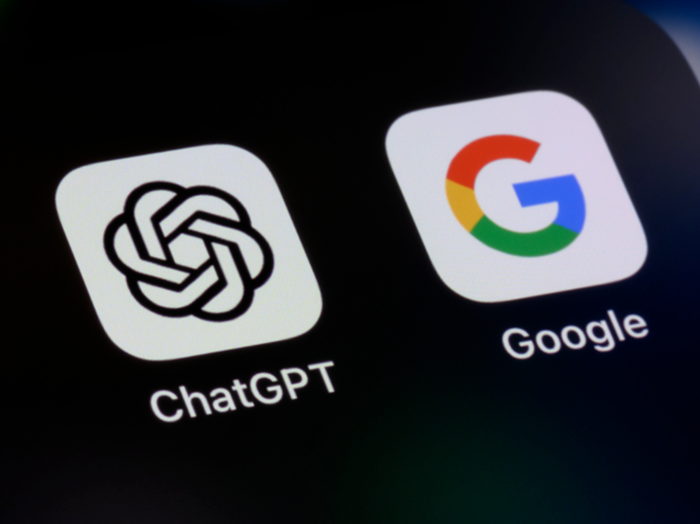
Many technology companies eventually face the same question:
Once you have succeeded, does that success actually make you more vulnerable to disruption?
The recent developments at Google and OpenAI are beginning to offer an uncomfortable answer.
In the second half of 2025, the AI industry witnessed an unexpected shift.
Google, once seen as a classic example of the bureaucratic inertia associated with large corporations, began to behave more like a hungry startup willing to take risks. OpenAI, the company that ignited the generative AI revolution, appeared to be moving in the opposite direction — increasingly cautious and focused on protecting what it had already achieved.
The numbers and developments tell an interesting story:
• Gemini 3 outperformed OpenAI's latest models on several key benchmarks.
• Gemini's monthly active user base surged, while ChatGPT's growth appeared to slow considerably.
• OpenAI issued an internal "Code Red" directive and put the development of certain new features on hold.
This is no coincidence. It reflects the organisational dynamics that often accompany success.
Companies working at the technological frontier face the same fundamental challenge:
They must do two seemingly contradictory things at the same time.
On the one hand, they must continuously explore the unknown and experiment rapidly. On the other, they must ensure product stability and deliver reliably at a global scale.
Innovation requires risk-taking. Operations require control. These two imperatives are inherently in tension.
Many mining equipment manufacturers and engineering technology companies find themselves in a similar position.
Once your core product has proven itself and customers have come to depend on its reliability, are you still willing to tear it down and start again?
When a new wave of technology arrives, do you prioritise protecting your existing business or take the risk of transforming it?
This is precisely the challenge addressed by decades of research at Harvard Business School into organisational ambidexterity: how can an organisation explore the future while continuing to deliver results today?
Very few companies manage to do both. Even fewer sustain that ability over time.
At moments like these, senior management teams often fall into one of two patterns:
• They freeze, afraid to make a move.
• They retreat, focusing on protecting their existing business.
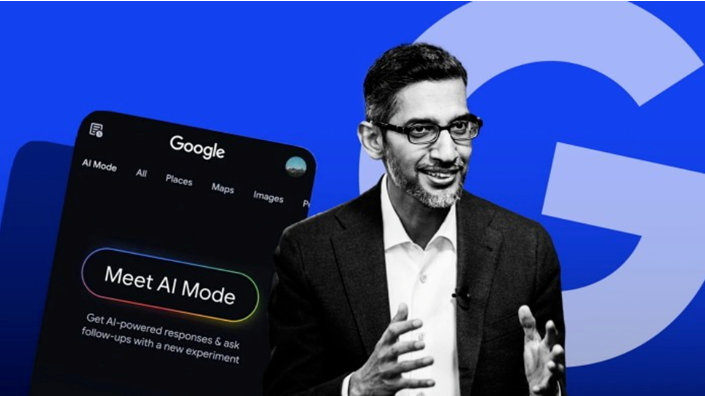
Google has chosen a third path: bringing exploratory work into the centre of its decision-making process.
It has taken several important steps.
Organisational restructuring: Google brought together Google Brain and DeepMind, reducing internal competition and fragmentation of resources.
Centralising decision-making: It strengthened the role of leaders capable of integrating technical, commercial and engineering perspectives in making key decisions.
Founders stepping back in: Larry Page and Sergey Brin became involved at critical moments, reinforcing strategic priorities.
Encouraging self-disruption: Google pushed for faster experimentation with core products such as Search, demonstrating a greater willingness to take risks that it might previously have avoided.
And the results?
Exploration was no longer pushed to the margins. Instead, it was brought closer to the centre of the organisation.
Advances in Gemini were integrated directly into Search, Android and Google Cloud services. Exploration and exploitation began to reinforce each other rather than compete for resources.
An organisation's true competitive strength does not lie in any single technological breakthrough. It lies in whether the entire system is aligned around the future.
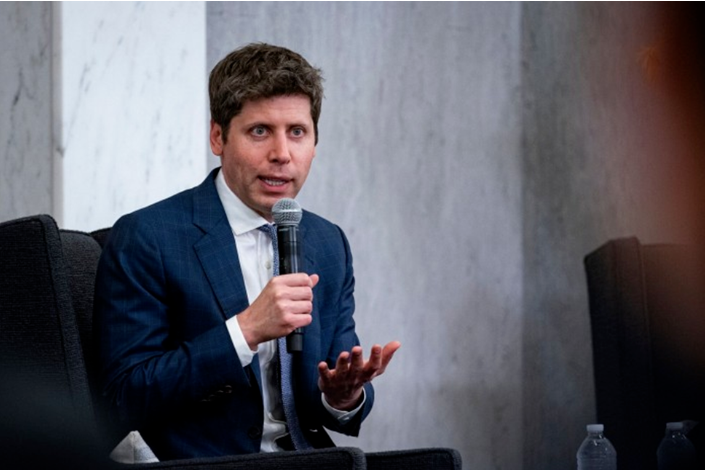
OpenAI's trajectory has been quite different.
After ChatGPT became a global phenomenon, OpenAI began to confront the same questions that face almost every successful company:
• How can we make the product more reliable?
• How can we meet the needs of enterprise customers?
• How can we respond to regulatory pressure?
• How can we protect our market share?
In December 2025, CEO Sam Altman reportedly declared a "Code Red", putting certain new initiatives — including advertising and AI agents — on hold so that the company could focus on improving the reliability, speed and enterprise readiness of its core product.
These decisions are understandable.
But they come at a cost: the room available for exploratory work becomes more limited.
Researchers leave for competitors and new laboratories. The organisation begins to operate around the goal of protecting its existing advantages rather than opening up new frontiers.
This is not necessarily a strategic failure. It is often an organisational pattern that emerges after success.
Once you have something valuable to protect, the entire system naturally begins to lean towards stability.
It is not a question of who is brave enough. It is a stage that many successful organisations eventually reach.

Behind this story lies a question that no technology company can avoid:
When the business environment changes dramatically, does your organisation instinctively protect what it has already achieved, or actively explore what comes next?
For many mining technology companies and engineering equipment manufacturers, this dilemma should sound familiar.
When your core equipment has already secured a strong market position, should you invest in developing an entirely new product line?
When customers have become accustomed to your existing service model, should you take the risk of pursuing digital transformation?
When your team has established stable processes, should you disrupt them to experiment with new technologies?
The real challenge is often not choosing the wrong technology. It is something more fundamental:
Losing the willingness to explore once you have become successful.
The contrast between Google and OpenAI offers an important lesson: the way an organisation is designed after achieving success can determine whether it continues to lead or is eventually overtaken by those that follow.
Ultimately, it comes down to three things:
1. Does senior management have clear strategic judgement? Can it identify which work truly matters?
2. Can the organisational structure accommodate competing priorities? Can exploration and day-to-day operations coexist?
3. Does the culture encourage risk-taking? Or has it become a culture in which playing it safe takes priority?
If you were in that position —
Your business model was proven. Your team was mature. Your customers depended on you.
Would you continue taking risks, or focus first on protecting what you had already built?
There is no universally correct answer.
But that choice may well determine whether your company is still in the game five years from now.