- sales@hot-mining.com +86 28 8331 1885 +86 15196677188
-

-

-


The global transition to clean energy is driving unprecedented demand for the minerals that power batteries, electric vehicles, renewable energy systems and modern infrastructure. Cobalt, copper, lithium and rare earth elements have become essential to this transformation.
Yet behind the promise of a greener future lie difficult social and environmental questions. Artisanal cobalt mining in the Democratic Republic of the Congo (DRC), for example, has drawn international attention to hazardous working conditions, child labour risks and the challenges of responsible sourcing. Meanwhile, copper mining in water-stressed regions of Chile has raised concerns about water consumption, pollution and the protection of local ecosystems.
The green energy transition therefore presents the mining industry with a complex challenge: how can it supply the minerals required for decarbonisation while ensuring that the costs are not unfairly borne by workers, local communities and the environment?
As artificial intelligence becomes increasingly integrated into mining, this question takes on a new dimension. The industry must consider not only what AI can optimise, but also whose interests its decisions serve.
AI is being applied across several important areas of the mining value chain.
Companies such as KoBold Metals and Goldspot have explored the use of AI and advanced data analytics to interpret geological information, identify exploration targets and support mineral discovery.
By integrating geological maps, geochemical data, geophysical surveys and historical exploration records, AI tools can help geologists identify patterns that may be difficult to detect through conventional analysis alone.
The potential benefits include more targeted drilling, improved exploration efficiency and better allocation of exploration budgets. However, the reliability of these systems depends on the quality, coverage and representativeness of the underlying data.
Autonomous haulage systems are changing the way large mines operate. Rio Tinto's autonomous haul trucks in Australia demonstrate how technologies such as GPS, sensors and integrated fleet-management systems can support continuous material transportation with reduced dependence on direct human operation.
These systems can improve fleet utilisation, optimise haulage routes and support more consistent operations. At the same time, they raise questions about workforce transitions, job displacement, reskilling and the distribution of productivity gains.
Underground mines are complex environments in which gas concentrations, ground movement, equipment conditions and ventilation can change rapidly.
By combining sensor networks with machine learning, mining companies can develop systems to monitor abnormal conditions and identify potential safety risks. Such systems can support earlier warnings and more informed operational decisions.
However, AI-based safety predictions should complement—not replace—engineering controls, established safety procedures and professional judgement. Their performance must be validated under real operating conditions, particularly where false alarms or missed warnings could have serious consequences.
The deployment of AI also creates new risks that mining companies need to address:
Algorithmic bias: Models trained on incomplete or unrepresentative datasets may perform unevenly across different operating environments and populations.
Unequal access to technology: Large mining companies may be able to invest in advanced sensors, computing infrastructure and AI systems, while smaller operators struggle with the costs.
Environmental and cultural blind spots: An algorithm focused primarily on ore recovery, production costs or transport efficiency may overlook biodiversity, water resources, Indigenous rights and culturally significant sites.
Lack of transparency: If the basis for an automated decision cannot be explained, workers and affected communities may have limited opportunities to challenge it.
The central issue is not whether AI can improve mining efficiency. It is whether the systems being developed can account for the wider consequences of their decisions.
China's mineral resource base includes many deposits characterised by low grades, fine particle sizes, complex mineral associations and difficult separation conditions. These so-called low-grade, fine-grained and refractory ores present significant challenges for conventional mineral processing.
Intelligent technologies offer new ways to improve resource utilisation, reduce waste and support more efficient operations.
HOT Intelligent Technology has developed intelligent mineral processing solutions, including X-ray-based ore sorting and advanced ore pre-concentration technologies.
By identifying differences in the physical and material characteristics of individual ore particles, intelligent sorting systems can help separate valuable material from waste before it enters downstream processing.
The potential benefits include:
Reducing the volume of material sent to energy-intensive grinding and processing stages.
Improving the utilisation of mineral resources that may otherwise be uneconomic to process.
Supporting more flexible responses to variations in ore characteristics.
Reducing unnecessary energy and water consumption across the processing chain.
The broader objective is to use data-driven sorting and process optimisation to improve the economic and environmental performance of mineral processing plants.
Minde Optoelectronics is presented in the source material as an example of applying AI and hyperspectral imaging to the separation of visually similar minerals.
By combining spectral information with intelligent identification algorithms, such technologies aim to distinguish minerals that conventional optical methods may struggle to separate.
The approach described in the source involves recovering brucite from serpentine-bearing material, with a reported product purity of 99.2%. If independently verified, this would illustrate how advanced sensing and intelligent classification can help improve the utilisation of complex mineral resources.
Another important development is the integration of underground mining, processing and backfilling.
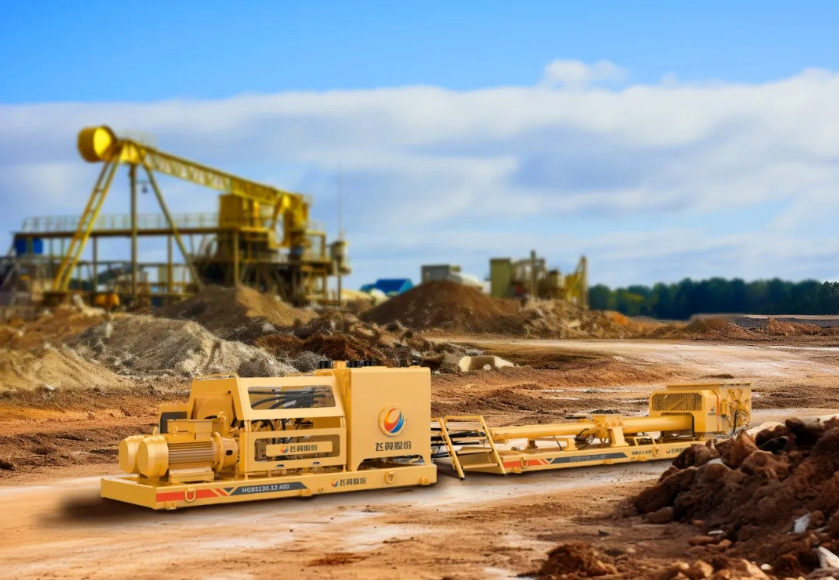
The source identifies Feiyi Co., Ltd. as an example of applying integrated intelligent underground backfilling technology. Under this approach, processed material can be returned to mined-out areas, helping manage underground voids and potentially reducing the need to transport material over long distances.
When appropriately designed and monitored, backfilling can contribute to ground stability, reduce surface subsidence risks and improve the overall efficiency of underground operations.
These examples point towards a broader shift: intelligent mining is not simply about extracting more ore. It is also about improving how resources, energy, water and waste are managed throughout the mining lifecycle.
The next stage of mining digitalisation may involve multi-agent systems (MAS), in which multiple specialised AI agents interact, exchange information and coordinate decisions.
Rather than relying on one central algorithm, a multi-agent system can divide a complex task into smaller objectives and coordinate different operational functions.
This approach could create opportunities for more comprehensive mine optimisation.
Different agents could monitor and optimise separate aspects of mining operations, such as extraction sequencing, mineral recovery, water use and energy consumption.
Through coordinated decision-making, the system could evaluate trade-offs between competing objectives and identify Pareto-efficient solutions—where improving one objective would require sacrificing another.
For example, a mine planning system could compare alternative production schedules based not only on ore recovery, but also on water consumption and energy demand.
Ethical considerations could also be incorporated into mining decision-support systems.
Before recommending an extraction plan, an AI system could be required to check whether the proposed activities conflict with environmental restrictions, community agreements, protected areas or culturally significant sites.
If a potential conflict is identified, the system could flag the issue, request further assessment or prevent the plan from proceeding until the relevant human authorities have reviewed it.
This is an important distinction: AI can help identify risks and enforce predefined constraints, but decisions involving human rights, cultural heritage and community consent must remain subject to legitimate human oversight.
Mineral supply chains often involve multiple stages, companies and jurisdictions. Establishing the origin of minerals and verifying compliance with responsible sourcing requirements can therefore be challenging.
AI could help analyse supply chain records, identify inconsistencies and flag unusual transactions. Blockchain-based systems may provide tamper-resistant records of selected transactions and custody transfers.
Together, these technologies could support more transparent mineral traceability.
However, digital records do not automatically guarantee ethical sourcing. The accuracy of the information entered into a system, the independence of verification and the accessibility of the records to affected stakeholders remain essential.
The development of intelligent mining systems should therefore extend beyond technical performance.
A responsible decision-making framework needs to consider several dimensions:
Ore grade and recovery: How efficiently are mineral resources being extracted and processed?
Operational performance: Are productivity, equipment utilisation and process stability improving?
Quality and control: Are products meeting the required technical and environmental standards?
Safety: Are workers protected and operational risks properly managed?
Environmental and community outcomes: Are water, energy, ecosystems and local communities being considered in operational decisions?
A balanced framework should treat these dimensions as connected priorities rather than allowing production efficiency to become the only measure of success.
The growing investment in AI-driven mining creates both opportunities and inequalities.
Large mining companies may have the resources to deploy autonomous fleets, advanced sensing systems and integrated data platforms. Smaller operators and artisanal mining communities may lack access to the same infrastructure.
If the benefits of technological progress are concentrated among a small number of companies, digitalisation could widen existing gaps in the mining industry.
Addressing this challenge requires more than developing better algorithms. It requires clear rules, transparent governance and meaningful participation.
Three priorities deserve particular attention.
The mining industry needs practical guidance on the responsible design, deployment and oversight of AI systems.
One possible foundation is the set of five ethical principles proposed by Luciano Floridi and colleagues: beneficence, non-maleficence, autonomy, justice and explicability.
Applied to mining, these principles could mean:
Beneficence: AI should contribute to safer operations, better resource utilisation and wider social benefits.
Non-maleficence: Systems should be designed to avoid foreseeable harm to workers, communities and ecosystems.
Autonomy: Human decision-makers should retain meaningful control over consequential decisions.
Justice: The benefits and risks of AI should be distributed fairly.
Explicability: Important decisions should be understandable, traceable and open to appropriate scrutiny.
These principles could inform industry standards, procurement requirements and corporate AI governance policies.
Data quality and availability strongly influence AI performance. Yet mining data is often fragmented across companies, projects and jurisdictions.
Greater collaboration on data standards, shared geological information and interoperable systems could help improve the accessibility of mining technology.
At the same time, data-sharing arrangements must respect commercial confidentiality, data ownership, Indigenous data rights and local legal requirements.
The objective should not be to make every dataset public, but to create fairer opportunities for responsible innovation and independent assessment.
Communities affected by mining should have access to understandable information about projects and the systems used to manage them.
Digital monitoring platforms could help communities follow environmental indicators, review relevant operational information and raise concerns when agreed standards are not met.
However, meaningful participation requires more than providing a dashboard or an automated complaint channel. Communities need access to independent expertise, transparent procedures and effective mechanisms for raising and resolving concerns.
AI should support accountability—not become a substitute for consultation, consent or human responsibility.
Artificial intelligence is changing how minerals are discovered, extracted, processed and transported. It can help improve productivity, strengthen operational safety, reduce waste and support more efficient use of natural resources.
But technological capability alone does not determine whether mining becomes more responsible.
A highly efficient algorithm can still produce harmful outcomes if its objectives ignore workers' rights, environmental limits or the interests of local communities. Conversely, AI designed with appropriate safeguards can help make risks more visible, decisions more transparent and resource management more accountable.
The question facing the mining industry is therefore no longer simply how to extract minerals more efficiently. It is how to build intelligent mining systems that serve both economic development and the wider public interest.
Machines do not determine the values embedded in their algorithms. People do.
As AI becomes more deeply integrated into mining, the industry's greatest responsibility will be to ensure that the intelligence beneath the ground is matched by accountability above it.
What kind of mining legacy should we leave for future generations?